
DJing began with radio.
Early DJs were broadcasters, curators of recorded sound, shaping musical journeys through selection, timing, and personality. Technology enabled transmission, but it was human judgement that spawned popular music. Listeners trusted the DJ to guide them through new music, moods, and moments. DJing has always been a relationship between sound, technology, and people. In many ways, this same relationship now defines the modern search for remote DJ collaboration, where technology exists to serve shared musical instinct rather than replace it.
The DJ relationship then became physical.
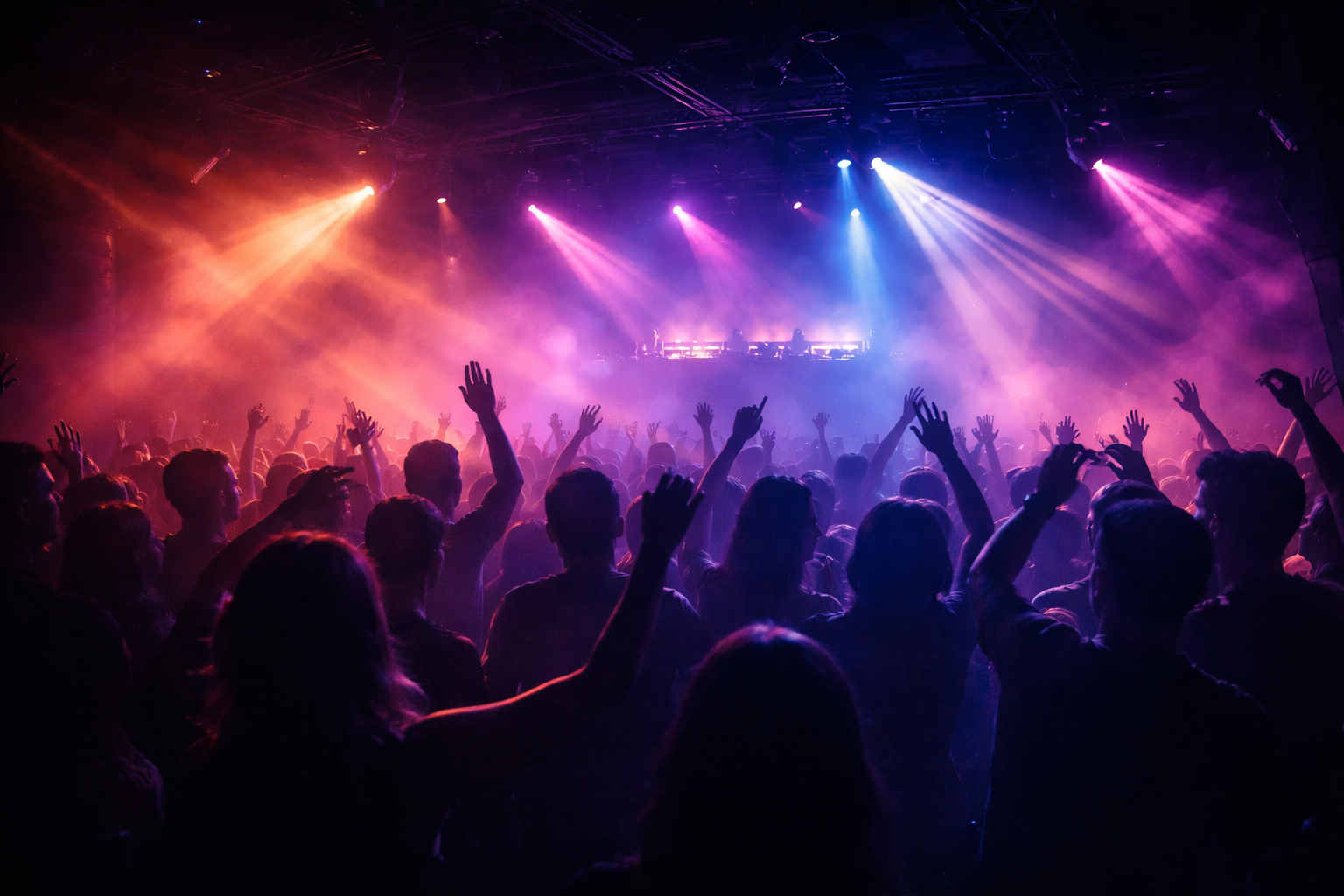
Early warehouse parties, block parties, and night clubs transformed DJing into a shared, existential and embodied experience. Crowds gathered to dance, to discover new sounds, and to respond to someone seamlessly moving from one hot record to the next. Mixing became a craft. Flow became a language. DJing transcended track-list curation, it became the feeling in the room. Over decades, DJ culture expanded into the modern, global EDM ecosystem. Touring cycles grew. Production scaled up. Festivals and super clubs emerged where DJs became adorned central figures, guiding a generation through shared experiences of sound, light, and movement. These curators of song, masters of mash-ups, and pirates of pulse, now inspire younger demographics more than many instrumental traditions that came before.
Back-to-back DJing is central.
Two DJs sharing a booth, taking turns, pushing each other creatively, reading the crowd together. This format reinforced what had always been true: DJing is innately social, a craft learned through the proximity of shared nights, shared moments, and shared breakthroughs. In my own 25-year professional career as a drummer and musician, I played in a platinum-selling rock act with a DJ in the band, and across thousands of club gigs where DJs were supports or headliners. Time and again, the same story came up. Most DJs did not learn alone. They learned at house parties, with friends, taking turns at the decks until sunrise or beyond. Showing off new tracks, testing transitions, learning by doing. What made this powerful was not performance, but real-time DJ collaboration, reacting instinctively to each other inside a shared musical moment.
Most aspiring DJs now practise alone.
Today, there are an estimated 20 million DJs worldwide who have purchased their own gear. Millions practise every week, driven by their love of music and the hope that one day they might get some gigs, build a following, a career, or maybe even reach the top. The passion is there. The technology is there. But the social context is fractured. They’ve got the best gear they can afford; they build libraries, refine techniques, and drop set after set where the music is heard only in their room. Practice is essential, but the crowds and social interaction that launched DJ culture have been largely replaced by isolation.
Streaming has offered a partial response, where DJs can broadcast to audiences across continents, which has undeniable value. But streaming is still mono-directional. Many streams, often hosting a few viewers. Connection without collaboration. Visibility without shared practice. What’s missing is a low latency DJ platform that allows DJs to actively play together, rather than perform at each other. We need to resolve the loneliness of the modern DJ experience.
Where Decksi enters.
Decksi enables two or more DJs to connect and perform together, live, from anywhere. It transcends streaming by sharing musical time, together. Built as a purpose-designed DJ collaboration app, Decksi preserves the instincts that shaped house parties, back-to-back sets, and club nights, while removing geographic limits. DJing was born from technology and community. It scaled through innovation and shared experience. Decksi exists to bring collaboration back to the centre of the craft, for everybody.